2 / 12
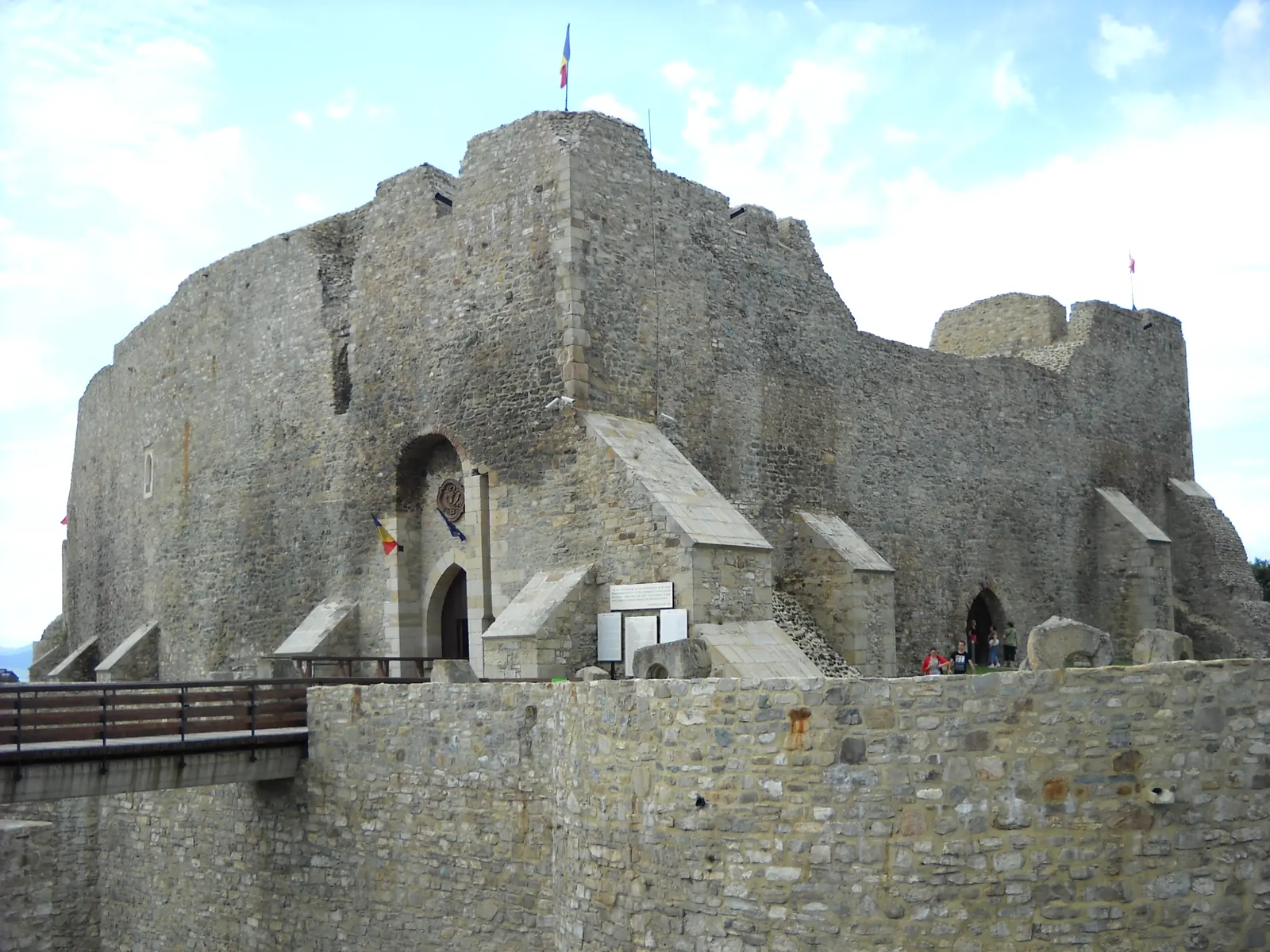
Stop 2The bastions and the gate through the north-east tower
Stephen the Great's bastions and the gate
Before you rise the bastions added by Stephen the Great. In the fifteenth century, bombards could hurl heavy stone or cast-iron balls, and straight walls had become vulnerable.
- Period
- 1475–1476
- Material
- River stone and quarried stone, hydraulic lime mortar
- Where it is
- The bastions and the gate through the north-east tower, approach
Read the textHide the text
Narration text
Before you rise the bastions added by Stephen the Great. In the fifteenth century, bombards could hurl heavy stone or cast-iron balls, and straight walls had become vulnerable. Stephen reacted quickly: he raised the old walls by six or seven metres, dug a new, deeper and wider ditch to the north, and flanked it with four semicircular bastions up to 30 metres high, with battlements and narrow firing slits.
The entrance was through the north-east tower, with double gates and a drawbridge. Look at the door frames: their Gothic style points to Transylvanian craftsmen, probably from Bistrița and Rodna, towns with which the prince had close ties. At the entrance to the outer courtyard there were two trapdoor snares known as mousetraps.
The building material is mostly river stone, bound with mortar so good that in places it has outlasted the stone itself. The usual garrison may have numbered around 300 men.